
The Mistake Everyone Makes First
As soon as the mornings turn cool, a lot of homeowners grab a tube of weatherstripping and start sealing up the garage like they're prepping for a Midwest winter. It's an easy trap to fall into — every home improvement article this time of year talks about insulating garage doors, blocking drafts, and keeping heat in. That advice isn't wrong, exactly. It's just not written for Raiford.
Here, winter doesn't hit a garage door the way summer and hurricane season already have. By November, your door has spent months absorbing humidity, getting soaked by afternoon downpours, and possibly taking on stress from storm winds. Sealing everything up tight before checking what that moisture already did is like painting over a water stain. The real first step isn't weatherproofing — it's inspecting for the damage the wet season already caused.
What North Florida Winters Actually Do to a Garage Door
Winters around Raiford, Starke, and Lake Butler are mild compared to most of the country, but they're not nothing. You'll get stretches of genuinely cold mornings, the occasional frost, and sharp temperature swings between a 40-degree morning and a 70-degree afternoon. That kind of swing causes metal components — springs, tracks, hinges — to contract and expand, which can turn a quiet door into a noisy one almost overnight, especially if it's already carrying rust or grime from the humid months before it.
Condensation is the other issue. Garages aren't climate controlled, so when warm, moist air meets a cold metal door panel or track, you get moisture forming right where you don't want it. If lubrication has already washed thin from a summer of humidity, that fresh condensation accelerates rust instead of being wiped away by a well-oiled, protected surface.
A Realistic Winter-Prep Checklist
Instead of starting with weatherstripping, work through the door in this order:
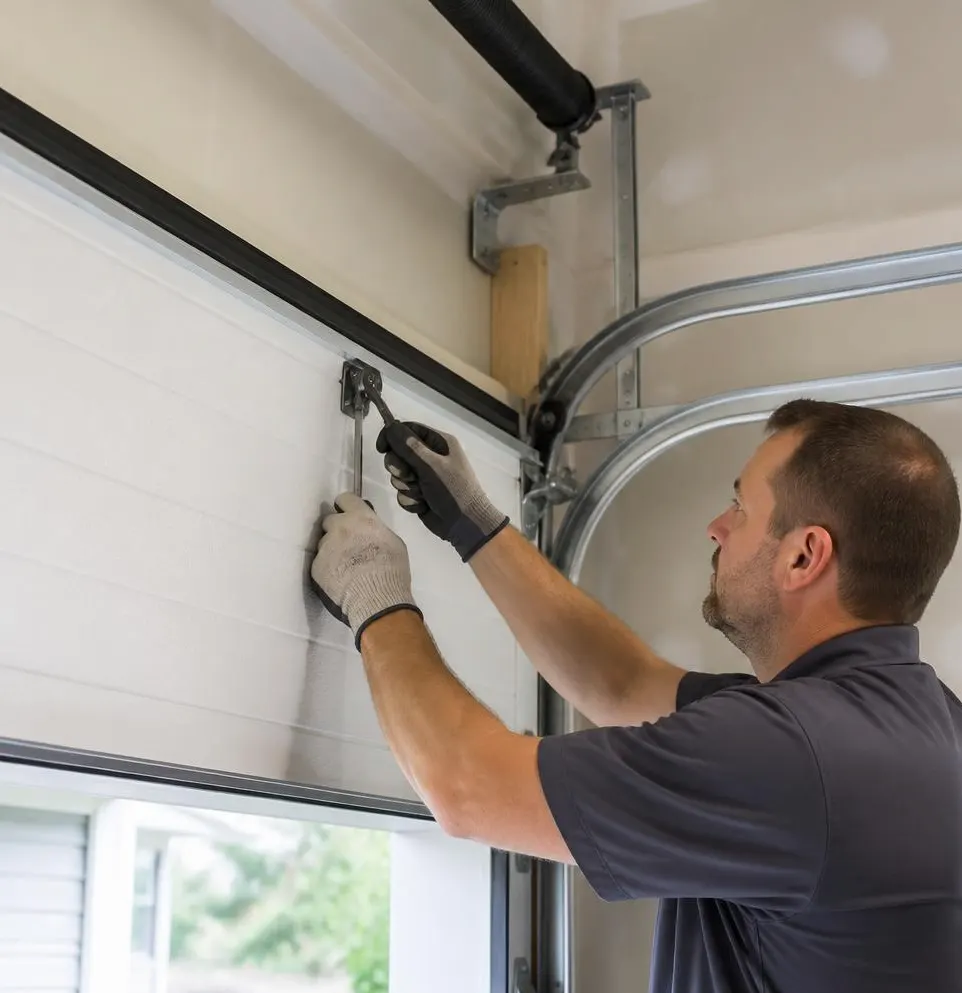
- Inspect springs and hardware for rust. Look along the torsion spring, the bottom brackets, and any exposed bolts. Surface rust that's just starting can often be caught early; heavy rust or pitting on a spring is a sign it's weakening and should be evaluated before it fails under tension.
- Check wood or composite doors for swelling. Months of humidity can cause panels to swell slightly, which shows up as a door that sticks, binds, or doesn't sit flush in the frame anymore. This is worth catching now, before cold mornings cause the wood to contract again and potentially warp unevenly.
- Re-lubricate every moving part. Chains, rollers, hinges, and springs all lose lubrication faster in humid conditions. A fresh coat of garage-door-specific lubricant (not WD-40, which doesn't hold up) protects against both rust and the noise that comes with cold-weather contraction.
- Look at the bottom seal and weatherstripping. After a summer of UV exposure and heat, rubber seals often crack, flatten, or pull away from the door. This is the one spot where replacing a worn seal genuinely helps — it keeps out cold drafts, blocks condensation-forming moisture, and keeps pests from moving in as temperatures drop.
- Clean the tracks. Pollen, dirt, and grit from months of afternoon storms tend to build up in the tracks. A simple wipe-down and inspection for bends or debris can prevent a door from running rough or jumping off-track later.
- Test the balance and auto-reverse. Disconnect the opener, lift the door halfway by hand, and see if it holds its position. A door that drifts up or down on its own means the springs are no longer balanced correctly — a bigger job, but one that's much easier to schedule now than during an emergency later.
- Check opener battery backup. Winter storms still bring power outages here. If your opener has a battery backup, test it now rather than finding out it's dead during the next outage.
When a Cold Snap Actually Hits
On the mornings when temperatures really do drop, pay attention to new noises — a grinding sound, a hesitation when the door starts moving, or a spring that sounds different than usual. These are often small signs of contraction stress on parts that were already worn from the humid months before. Catching them in late fall is far easier than dealing with a stuck or off-track door in the middle of a cold morning rush.
When to Call Raiford Overhead Door Co
If your inspection turns up rust on the springs, visible swelling on a wood panel, or a door that's clearly out of balance, that's the point where it's worth bringing in a technician rather than troubleshooting further yourself. Our Garage Door Maintenance service covers exactly this kind of seasonal tune-up — lubrication, hardware inspection, balance testing, and track cleaning — so small issues get caught before they turn into a dead spring or an off-track door in January. If you've already spotted frayed cables or a spring that looks compromised, our Garage Door Cable Repair and spring replacement work is built to handle exactly that kind of wear safely.
If you're anywhere in Raiford, Starke, Lake Butler, Lawtey, Hampton, Worthington Springs, Brooker, or Waldo and want your garage door checked before winter settles in, give Raiford Overhead Door Co a call. We'll get it inspected, lubricated, and running the way it should — before the cold mornings make small problems a lot more obvious.